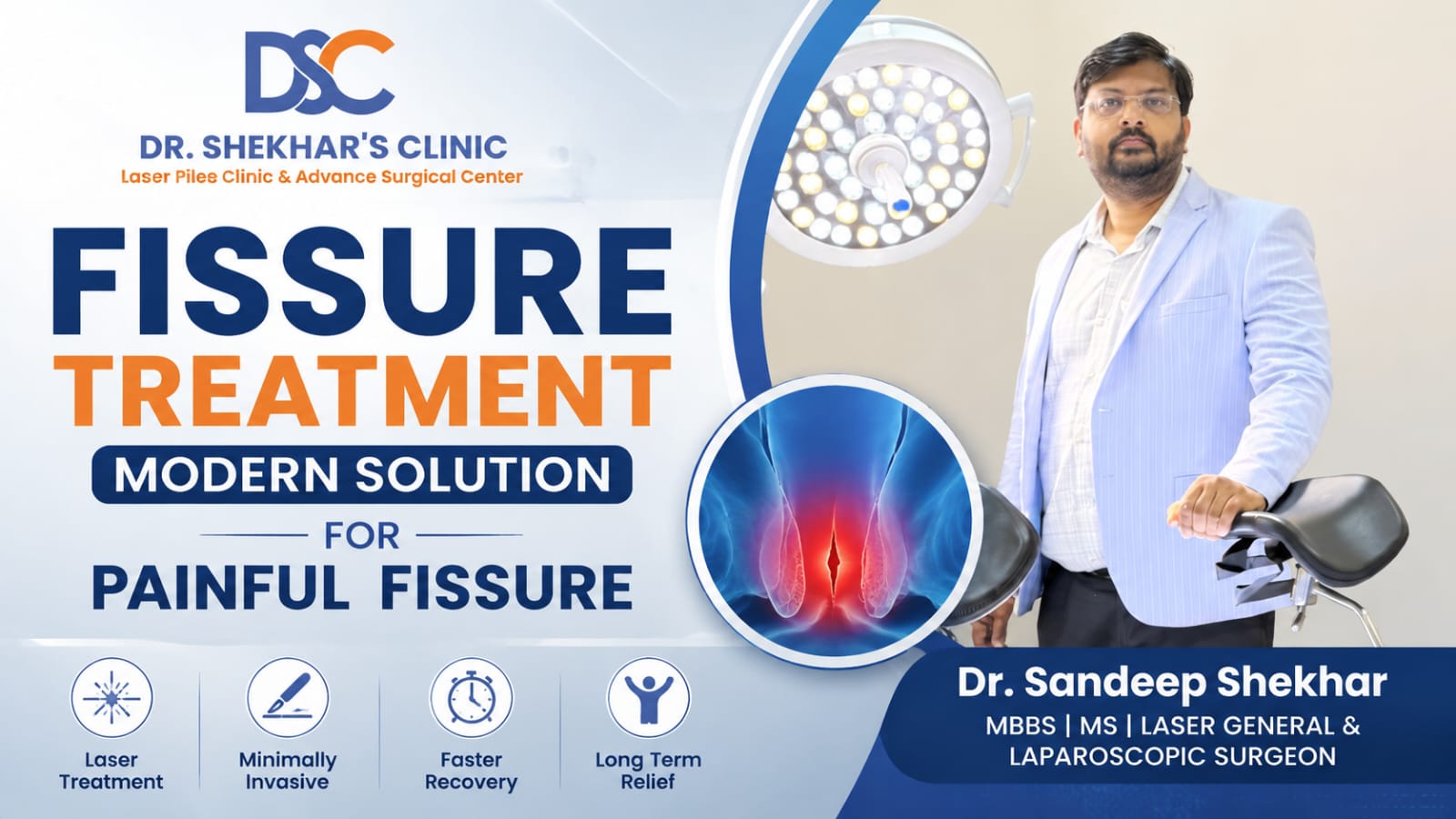
An anal fissure is a small tear in the lining of the anus that can cause significant pain and discomfort, particularly during bowel movements. Although an anal fissure may appear to be a minor problem, persistent fissures can affect daily activities and quality of life.
Constipation, hard stools, and repeated straining are common factors associated with anal fissures. Early diagnosis and appropriate treatment can help prevent a temporary fissure from becoming a persistent problem.
If you are searching for Fissure treatment in Dombivli, Fissure treatment near me, or an experienced fissure doctor, understanding the condition and available treatment options is important.
What Is an Anal Fissure?
An anal fissure is a tear or crack in the lining of the anus.
It may develop after passing a hard or dry stool and can result in pain, burning, and bleeding during bowel movements.
Common factors associated with anal fissures include:
- Constipation
- Hard stools
- Straining during bowel movements
- Repeated diarrhea
- Local trauma or irritation
- Certain underlying bowel conditions
A proper examination helps determine whether symptoms are caused by a fissure or another anorectal condition.
Common Symptoms of Anal Fissure
Typical symptoms may include:
- Sharp pain during bowel movements
- Burning pain after passing stool
- Small amounts of bright-red blood
- Pain that may continue after bowel movements
- Itching or irritation around the anus
- Fear of passing stool because of pain
Persistent symptoms should not be ignored, particularly when pain or bleeding continues.
Acute and Chronic Anal Fissures
Anal fissures can be broadly described as acute or chronic depending on their duration and clinical features.
Some fissures may heal with conservative treatment, particularly when the underlying constipation or stool-hardness is addressed.
Persistent fissures may require additional medical treatment or a procedure.
Treatment for Anal Fissure
Treatment depends on the severity and duration of the fissure.
Initial management may include:
- Increasing dietary fiber
- Drinking adequate fluids
- Avoiding straining
- Keeping stools soft
- Appropriate medications prescribed by a doctor
- Warm baths for symptom relief
If symptoms persist despite conservative treatment, a specialist may recommend additional treatment.
Benefits of Early Fissure Treatment
Timely diagnosis and treatment can help:
- Reduce pain during bowel movements
- Address constipation and hard stools
- Prevent repeated injury
- Improve bowel habits
- Reduce disruption to daily activities
- Identify chronic fissures requiring specialist care
The treatment plan should always be individualized according to the patient’s symptoms and examination.
Who Should Consult a Fissure Specialist?
Medical evaluation is recommended for patients experiencing:
- Repeated pain during bowel movements
- Recurrent anal bleeding
- Persistent burning after passing stool
- Symptoms that continue despite home measures
- Repeated episodes of anal fissure
- Difficulty passing stool because of pain
A doctor can distinguish a fissure from piles, fistula, abscess, or other anorectal conditions.
Preparing for Fissure Treatment
Your doctor may recommend:
- Clinical examination
- Review of bowel habits
- Assessment of constipation
- Review of current medications
- Dietary modifications
- Appropriate investigations when necessary
Following medical advice can help improve treatment outcomes and reduce recurrence.
Recovery After Fissure Treatment
Recovery depends on the severity of the fissure and the treatment used.
Patients may be advised to:
- Maintain adequate fiber intake
- Drink sufficient fluids
- Avoid straining
- Follow prescribed medication schedules
- Maintain appropriate anal hygiene
- Gradually return to normal activities
- Attend follow-up appointments
When Should You Consult a Fissure Doctor?
Do not ignore persistent anal pain or bleeding.
Consult a specialist if you experience:
- Severe or recurring pain
- Persistent bleeding
- A fissure that repeatedly returns
- Symptoms lasting despite conservative care
- Difficulty passing stool
- Symptoms affecting your daily routine
Early consultation can help determine the correct diagnosis and prevent unnecessary delay in treatment.
Choosing the Right Fissure Specialist
When selecting a doctor, consider:
- Experience in anorectal conditions
- Proper clinical evaluation
- Knowledge of both conservative and procedural treatments
- Personalized treatment planning
- Clear explanation of treatment options
- Appropriate follow-up care
Conclusion
An anal fissure can cause considerable pain, but appropriate diagnosis and treatment can help patients manage the condition effectively.
The first step is identifying the underlying cause, particularly constipation, hard stools, or repeated straining. When symptoms persist, specialist evaluation becomes important.
If you are looking for Fissure treatment in Dombivli, consulting an experienced anorectal surgeon can help you understand whether conservative management or a procedural approach is appropriate.
Frequently Asked Questions (FAQs) – Anal Fissure
- What is an anal fissure?
An anal fissure is a tear in the lining of the anus that can cause pain and bleeding, particularly during bowel movements.
- What commonly causes anal fissures?
Hard stools, constipation, and straining during bowel movements are common contributing factors.
- Can an anal fissure heal without surgery?
Some fissures can improve with conservative management, particularly when constipation and hard stools are addressed. Persistent fissures may require additional treatment.
- Is every case of anal pain a fissure?
No. Anal pain may occur with several anorectal conditions, including piles, fissure, abscess, and other disorders. Proper examination is important.
- How can fissures be prevented?
Maintaining soft stools through adequate fiber and fluids, avoiding excessive straining, and addressing constipation can help reduce the risk of fissures.
Best Hernia Treatment Doctor in Dombivli
Why Patients Search for Dr Sandeep Shekhar for Fissure Treatment
Patients frequently search for Dr Sandeep Shekhar, Fissure treatment in Dombivli, and Fissure treatment near me when looking for treatment for persistent anal pain and fissure symptoms.
Patients generally look for:
- Experience in anorectal care
- Modern treatment approaches
- Detailed consultation
- Individualized treatment planning
- Proper follow-up
Choosing a doctor should always be based on medical assessment and treatment suitability.
For Consultations and Appointments
Dr. Sandeep Shekhar
📞 8369071247
🌐 Dr Shekhar Clinic
📍 Mumbai Dombivli